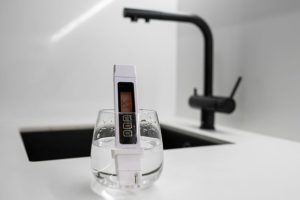
We all do it. You walk into the kitchen, grab a glass, turn on the tap, and take a drink. It looks clear. It flows smoothly. So, it must be clean, right?
Not necessarily.
If you live in Orange County, you have likely noticed that your tap water has a distinct “personality.” Maybe it smells a little bit like a swimming pool. Maybe it leaves a white, chalky crust on your coffee pot. Or maybe your skin feels tight and itchy right after a shower.
While our municipal water treatment plants do a tough job of making water safe to drink (meaning it won’t make you sick instantly), “safe” doesn’t always mean “pure.” By the time that water travels through miles of old city pipes to get to your house, it can pick up some unwanted passengers.
This is why so many homeowners are switching to whole house filtration systems. But what exactly are these systems taking out? Are they just for taste, or do they actually make the water safer?
In this guide, we are going to break down the invisible soup that often comes out of your faucet. We will look at exactly what a good filtration system removes and why your body (and your plumbing) will thank you for it.
The “Swimming Pool” Effect: Chlorine and Chloramine
Let’s start with the most obvious one. You know that smell. You turn on the shower in the morning, and the steam hits you, it smells like bleach.
That is Chlorine.
City water treatment facilities add chlorine to the water supply for a very good reason: it kills bacteria and viruses. It is a disinfectant. Without it, we would be dealing with waterborne diseases. However, once the water reaches your home, the chlorine has done its job. It doesn’t need to be there anymore.
Why You Want It Gone
While drinking chlorinated water in small amounts is generally considered safe, bathing in it is a different story.
- Inhalation: When you take a hot shower, the chlorine turns into gas (steam). You actually inhale more chlorine during a 10-minute shower than you would by drinking eight glasses of tap water.
- Skin and Hair: Chlorine strips away the natural oils that protect your skin and hair. This is a huge reason why so many people suffer from dry, itchy skin or brittle hair.
The New Player: Chloramine
Recently, many water districts have switched from simple chlorine to Chloramine (a mix of chlorine and ammonia). Why? Because it stays in the water longer. The problem is, chloramine is much harder to remove than standard chlorine and can give water a bad taste and smell. A high-quality whole house filter uses specialized carbon media to trap these chemicals before they ever hit your showerhead.
The Hard Truth: Calcium and Magnesium
If you live in Southern California, you don’t just have water; you have “liquid rock.”
We are talking about Hard Water. This isn’t a toxic contaminant, but it is certainly a nuisance. Hard water is packed with high levels of dissolved minerals, specifically Calcium and Magnesium.
You might think, “Aren’t minerals good for me?” In your diet, yes. In your plumbing? Absolutely not.
The Damage It Causes
- Scale Buildup: That white, crusty stuff on your showerhead? That is calcium. Inside your pipes, it builds up like plaque in an artery, slowing down water flow.
- Appliance Death: Your water heater, dishwasher, and washing machine have to work twice as hard to heat and move hard water. This wears them out years before their time.
- Soap Scum: Hard water prevents soap from lathering. Instead of bubbles, you get a sticky scum that clings to your bathtub and your skin.
This is where a Whole House Water Conditioner shines. Unlike a basic filter that just cleans the water, a conditioner addresses the mineral structure of the water to prevent this scale buildup without using heavy bags of salt.
The Invisible Metals: Lead and Mercury
Now we are getting into the stuff that is actually scary. Heavy metals are not things you can usually taste or smell, but they can have serious long-term health effects.
Lead is the big one everyone worries about.
According to the Centers for Disease Control and Prevention (CDC), there is no known safe level of lead in a child’s blood. Even low levels can affect IQ and attention span.
But wait—doesn’t the city remove lead? Yes, usually. The problem isn’t the treatment plant; it is the journey.
Many homes, especially those built before 1986, have copper pipes soldered with lead. Even if your house is new, the city’s main service lines under the street might be old. As water flows through these aging pipes, it can corrode the metal, causing lead to leach into your water supply.
A robust whole house filtration system acts as a final barrier or “security guard” for your home. It catches these heavy metals right at the point of entry so they never make it to your kitchen tap or your bathroom sink.
The “Yuck” Factor: Sediment, Rust, and Dirt
Have you ever gone on vacation, come back, turned on the tap, and seen brown water spit out?
That is sediment. It is a mix of:
- Rust flakes from old iron pipes.
- Sand and silt from the water source.
- Debris from water main breaks or construction down the street.
Even when you can’t see it, microscopic particles of dirt are often floating in your water. Over time, this sediment acts like sandpaper inside your appliances. It clogs up the tiny valves in your dishwasher and ruins the seals in your faucets, causing them to drip.
Most whole house systems include a Pre-Filter. Think of this like the air filter in your car. It catches the big chunks of dirt and rust first, ensuring the finer filters can focus on the chemical stuff.
Volatile Organic Compounds (VOCs)
This sounds like something from a science fiction movie, but VOCs are very real. These are organic chemicals that turn into vapor at room temperature.
Common VOCs found in water include:
- Pesticides and Herbicides: Runoff from farms and lawns can seep into groundwater.
- Industrial Solvents: Chemicals used in dry cleaning or manufacturing that find their way into the water table.
Because Southern California is so densely populated, the risk of groundwater contamination from urban runoff is real. VOCs are particularly tricky because, like chlorine, they can be inhaled when they vaporize in a hot shower. Activated carbon filters are incredibly effective at soaking these up like a sponge.
Emerging Contaminants: PFAS (The Forever Chemicals)
You might have seen this in the news recently. PFAS (per- and polyfluoroalkyl substances) are man-made chemicals used in non-stick cookware, stain-resistant fabrics, and firefighting foam.
They are called “forever chemicals” because they don’t break down in the environment. They just stay there. Unfortunately, they are showing up more and more in municipal water supplies across the country. While regulations are catching up, many standard city treatment processes aren’t designed to fully remove them yet. High-quality home filtration offers an added layer of defense against these modern pollutants.
Visualizing the bad Stuff
It can be hard to keep track of all these scientific names. Here is a simple table to help you understand what might be in your water and what it does to your home and health.
| Contaminant | What Is It? | How You Notice It | Primary Negative Effect |
| Chlorine | Disinfectant chemical | Bleach smell, bad taste | Dries skin/hair, fades clothes. |
| Calcium/Magnesium | Hard water minerals | White scale, soap scum | Ruins appliances, clogs pipes. |
| Sediment/Rust | Dirt and pipe debris | Cloudy or brown water | Clogs faucet aerators, damages seals. |
| VOCs | Solvents/Pesticides | medicinal or fuel smell | Potential long-term health risks. |
| Lead | Heavy metal | Invisible/Tasteless | Neurotoxin (especially for kids). |
Why “Pitcher Filters” Aren’t Enough
A lot of people think, “I’ll just buy a filter pitcher for the fridge, and I’m fine.”
That is better than nothing, but it only solves a tiny fraction of the problem.
- Volume: A pitcher filters maybe a gallon a day. You use hundreds of gallons a day for showering, brushing teeth, and washing clothes.
- Exposure: As we mentioned, your skin is your largest organ. You absorb contaminants in the shower just as easily as you drink them. A fridge pitcher does nothing to protect your hair, your skin, or your plumbing pipes.
The Solution for Orange County Homes
Living in Orange County means enjoying a beautiful lifestyle, but it also means dealing with some unique water challenges. The water here is hard, and the journey it takes to get to us is long.
At Best Home Water Treatment Systems, we don’t believe in “one size fits all.” We know that the water quality in Irvine can be different from the water in Huntington Beach. That is why we specialize in custom solutions.
Our Whole House Water Conditioners are designed to tackle the specific “cocktail” of contaminants found in our local supply. We focus on removing the bad stuff (chlorine, VOCs, sediment) while managing the hard minerals so your home runs smoothly.
If you are tired of guessing what is in your water, you can check out Our Products to see the range of systems we install.
Taste vs. Safety: A Crucial Distinction
When talking about contaminants, it is helpful to categorize them into two buckets: Aesthetic and Health.
Aesthetic Contaminants
These are things that make the water “gross” but won’t necessarily send you to the hospital.
- Sulfur: Smells like rotten eggs.
- Iron: Leaves orange stains in your toilet bowl.
- Chlorine: Makes water taste like a pool.
Health Contaminants
These are the silent dangers.
- Lead and Arsenic: You can’t taste them.
- Bacteria and Cysts: Usually handled by the city, but if a pipe breaks, they can enter the line.
A comprehensive whole house system handles both categories. It improves your quality of life (better tasting coffee, softer skin) and provides peace of mind regarding safety.
How Filtration Protects Your Wallet
We often talk about health, but let’s talk about money for a second. Contaminants are expensive.
- Clothes: Chlorine bleaches fabric. Hard water traps dirt in fibers. This means your clothes fade faster and wear out sooner.
- Plumbing: Acidic water or heavy sediment can cause pinhole leaks in copper piping. Re-piping a house costs thousands of dollars.
- Energy: If your water heater is coated in scale (from calcium), it has to burn more gas or electricity to heat your water.
By removing these contaminants at the source—the moment water enters your garage or basement—you are protecting every single investment inside your home.
Taking the Next Step
You don’t have to be a scientist to know that clean water is better. Whether you are worried about the long-term health effects of lead, or you are just sick of your expensive shampoo not lathering because of the hard water, there is a fix.
It starts with knowing what you are dealing with. If you are in Orange County, Best Home Water Treatment Systems is your local expert. We can help you identify exactly what is in your water and propose a solution that fits your home size and budget.
Feel free to visit us at Best Home Water Treatment Systems or simply Contact Us to chat with a technician. We believe everyone deserves water that is clean, clear, and worry-free.
Frequently Asked Questions
- Do whole house filters remove fluoride?
This is a very common question. Standard carbon filters generally do not remove fluoride effectively. Fluoride is a very difficult chemical to bond with. If removing fluoride is a priority for you, you typically need a specific type of filtration, such as Reverse Osmosis (usually installed under the kitchen sink for drinking) or a specialized whole-house tank designed specifically for fluoride reduction. Be sure to ask your technician if this is a concern for you.
- Will a whole house system remove bacteria?
Generally, no. Most municipal water is already treated with chlorine to kill bacteria. Standard whole house carbon filters are designed to remove chemicals (like the chlorine) and physical sediments, but they are not UV lights. If you are on a private well where bacteria is a risk, you would need to add a UV light system to your filtration setup to ensure the water is sterilized.
- How do I know when the filter has stopped removing contaminants?
Great question. Unlike a lightbulb that burns out, a filter’s performance fades slowly. You might notice the chlorine smell creeping back into your shower, or you might see a drop in water pressure (indicating the filter is clogged with sediment). However, most systems come with a recommended schedule—usually, the main media lasts 5–10 years, while the pre-filter needs changing every 6–9 months.
- Does the system remove the “good” minerals too?
It depends on the system. A Reverse Osmosis system removes everything, including healthy minerals. However, a Whole House Carbon Filter or Conditioner typically leaves the natural mineral content (like calcium and magnesium) in the water but alters it so it doesn’t stick to your pipes. This means you still get the health benefits of the minerals without the plumbing damage.
- Can I drink water from the hose after installing this?
Technically, yes! Since the system is installed at the main water line where it enters your house, even your outside spigots (unless bypassed) will dispense filtered water. This is actually great for washing your car because the filtered water is less likely to leave spots on your paint job.
- Is bottled water still better than filtered home water?
Not really. In fact, filtered home water is often fresher. A lot of bottled water is just filtered tap water sitting in plastic bottles for months, potentially leaching plastic chemicals into the water. By filtering your own water at home, you get fresh, contaminant-free water instantly, and you stop contributing to plastic waste. It’s a win-win.