There is something romantic about having a private well. You aren’t reliant on the city. You don’t have a monthly water bill. It feels like you are living off the land, self-sufficient and independent.
Then, you turn on the faucet.
Instead of crisp, mountain-fresh water, the room fills with the smell of rotten eggs. Or maybe you notice that your white laundry is turning a distinct shade of orange. Or perhaps, most worryingly, you just aren’t sure if that water is actually safe to drink.
Unlike city water, which is treated, tested, and monitored by municipal employees before it ever reaches your house, well water is 100% your responsibility. You are the mayor, the city council, and the water treatment plant operator all rolled into one.
If you are looking into a Whole House Water Filter System for Well Water, you have probably realized that the generic “water softener” they sell at the hardware store isn’t going to cut it. Well water is a wild animal. To tame it, you need a specific strategy.
In this guide, we are going to walk through the unique challenges of private wells, why “one-size-fits-all” filters fail, and exactly what equipment you need to protect your home and your health.
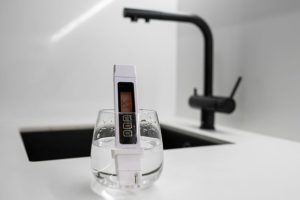
The First Step: Stop Guessing and Start Testing
If you take nothing else away from this guide, remember this: You cannot buy a well water system without a comprehensive lab test.
With city water, we generally know what to expect (chlorine, hardness, maybe some sediment). With well water, your neighbor’s water could be perfect, while yours is full of arsenic or iron bacteria. They might be drilling into a different aquifer or hitting a different vein of rock.
According to the Centers for Disease Control and Prevention (CDC), over 15 million households in the United States rely on private wells. The EPA does not regulate these wells. That means if there are nitrates from fertilizer runoff or bacteria from a nearby septic tank in your water, no one is going to send you a warning letter. You have to find it yourself.
What you need to test for:
- Basic Mineral Panel: pH, Hardness, Iron, Manganese, Total Dissolved Solids (TDS).
- Health Contaminants: Nitrates, Arsenic, Lead.
- Biologicals: Coliform bacteria and E. coli.
Once you have these numbers, you have a blueprint. Without them, you are just throwing money at a problem you don’t understand.
The “Big Three” Villains of Well Water
While every well is unique, we see three repeat offenders that cause 90% of the complaints from homeowners.
1. Iron (The Stainer)
Iron is the most common complaint. It comes in two main forms, and you treat them differently.
- Ferrous Iron (“Clear Water Iron”): The water looks clear when it comes out of the tap, but after sitting in a glass (or a toilet bowl), it turns red/orange. This is dissolved iron. A water softener can handle a little bit of this, but high levels need an oxidizer.
- Ferric Iron (“Red Water Iron”): The water comes out of the tap looking rusty. This is iron that has already rusted. You need a sediment filter to physically catch this.
The Pro Tip: If your water smells like “earth” or slime is growing in your toilet tank, you might have Iron Bacteria. This is a living organism that eats iron. It creates a sludge that will clog standard filters in days. You need heavy-duty disinfection (like chlorine injection or UV) to kill it.
2. Sulfur (The Smeller)
That rotten egg smell? That is Hydrogen Sulfide gas.
It is naturally occurring in groundwater, produced by decaying organic matter or sulfur bacteria. Aside from the terrible smell, it is corrosive to plumbing metals.
To fix this, we usually use an Air Injection System. We inject a bubble of air into the top of the tank. As the water sprays through the air, the gas oxidizes (turns into a solid particle) and gets trapped in the filter media.
3. Hardness (The Destroyer)
Just like city water in Orange County, well water is often incredibly hard. Calcium and magnesium will scale up your pipes, ruin your water heater, and make your skin itch. A heavy-duty softener is almost always part of a well water setup.
The Anatomy of a Well Water System
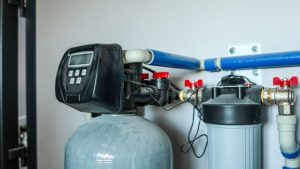
Because well water has so many potential issues, a single tank is rarely enough. We usually install a “treatment train”—a series of systems working together.
Here is a breakdown of what a robust setup looks like:
| Stage | Equipment Name | What It Does |
| Stage 1 | Spin-Down Filter | Catches large sand and grit right from the pump. Prevents clogging downstream. |
| Stage 2 | Oxidizing Filter | Uses air or chemicals to remove Iron and Sulfur (the smell). |
| Stage 3 | Water Softener | Removes calcium and magnesium hardness. |
| Stage 4 | UV Light | CRITICAL. Zaps bacteria and viruses with Ultraviolet light. |
| Stage 5 | Reverse Osmosis | (Optional) Under-sink unit for ultra-pure drinking water (removes nitrates/arsenic). |
Why “City” Systems Fail on Wells
We get calls all the time from people who bought a high-end city water filter online, installed it on their well, and ruined it in six months.
1. Chlorine vs. No Chlorine
City filters are designed to remove chlorine. Well water filters often need to add an oxidizer or handle raw bacteria. If you put a carbon filter (meant for city water) on a well with bacteria, the bacteria will breed inside the wet carbon. You essentially create a bacteria incubator in your garage.
2. Oxygen Demand
Well water is often “anoxic” (no oxygen). Standard filters struggle to remove iron without oxygen. Specialized well systems often have built-in air injectors to fix this.
3. Flow Rates
Well pumps are different from city pressure. A well pump has a pressure switch (usually set to 40/60 psi). If your filter is too restrictive, it can cause your well pump to “short cycle” (turn on and off rapidly), which burns out the pump motor. That is a very expensive repair.
The Importance of the UV Light
If you are on city water, the city adds chlorine to kill bugs. On a well, you don’t have that safety net.
Even if your water tests negative for bacteria today, heavy rain or a small crack in your well casing can introduce E. coli tomorrow.
We strongly recommend a UV (Ultraviolet) Sterilization System as a final firewall.
The water passes through a clear sleeve surrounded by a high-intensity UV bulb. The light scrambles the DNA of bacteria and viruses so they cannot reproduce and make you sick. It adds no chemicals to the water and doesn’t change the taste. It is purely for safety.
Maintenance: The Reality Check
Owning a well system requires more attention than a city system.
- Potassium Permanganate / Hydrogen Peroxide: If you have an advanced iron filter, you might need to refill a solution tank occasionally.
- UV Bulb: This must be changed every 12 months. Even if it lights up, the UV strength degrades over time.
- Sediment flush: You might need to open a valve to flush out sand from the spin-down filter once a month.
It sounds like work, but the payoff is incredible. When treated correctly, well water can be tastier and healthier than anything you get from a bottle. It is mineral-rich and chemical-free.
Expert Tips for Installation
If you are getting ready to install, here are a few things your installer needs to know:
- Place it BEFORE the pressure tank? NO.
The equipment usually goes after your well’s pressure tank. If you put it before, the pump can’t read the pressure correctly, and you risk blowing up the filter or burning out the pump. - Drainage is Key.
Well systems backwash (clean themselves) frequently. They dump a lot of water during this cycle. You need a drain that can handle 5–10 gallons per minute without overflowing. You cannot just run a tiny tube into a bucket. - Winterizing.
If your well equipment is in a shed or outside (common in rural setups), it must be insulated. One freeze will crack the control heads and flood your property.
Final Thoughts
Living on well water requires vigilance, but it doesn’t have to be a burden. The technology we have today—from air injection iron filters to high-intensity UV lights—makes it possible to turn even swampy, smelly well water into pristine drinking water.
But don’t try to DIY the design phase. The cost of fixing a messed-up install is far higher than the cost of doing it right the first time.
If you are unsure what is in your well, or if your current system isn’t doing the job, Contact Us to schedule a consultation. Let’s get your water tested and get your home protected.
Frequently Asked Questions
- Can I use a regular water softener for my well?
It depends. If you only have hardness (calcium), yes. But if you have Iron or Sulfur, a regular softener will likely get ruined. The iron coats the resin beads inside the softener, killing its ability to soften water. If you have moderate iron, you need a “fine mesh” resin softener or a dedicated iron filter before the softener.
- How often should I test my well water?
We recommend testing for bacteria (coliform/E. coli) and nitrates at least once a year. You should also test immediately if you notice a change in taste, odor, or appearance, or if there has been flooding in your area.
- Why does my well water smell like rotten eggs?
This is hydrogen sulfide gas. It can be caused by sulfur bacteria reacting with the magnesium anode rod in your water heater, or it can be naturally present in the groundwater. If the smell is only in the hot water, changing the water heater anode to aluminum might fix it. If it is in the cold water too, you need an air injection filtration system.
- Is UV light really necessary?
Technically, no law forces you to have it. However, we consider it “seatbelts for your water.” You might drive for years without an accident, but you still wear a seatbelt. UV light protects you from the sudden, invisible bacterial contamination that can happen with wells. It is the only way to ensure 24/7 biological safety without using chemicals.
- Will a whole house filter lower my well pressure?
Any filter creates some resistance (called “pressure drop”). However, if the system is sized correctly for your pump’s flow rate, you shouldn’t notice it. If you undersize the system (e.g., putting a small 9-inch tank on a house that needs 15 gallons per minute), you will definitely kill your water pressure.
- What are the brown slime chunks in my toilet tank?
That is likely “Iron Bacteria.” It is not toxic, but it is a nuisance. It forms a gelatinous slime that clogs pipes and filters. Standard filters can’t kill it. You usually need to shock-chlorinate the well (pour bleach down the well shaft, hire a pro for this) and then install a system that can continuously treat it.