An instant hot water dispenser is a small, insulated tank under your sink that keeps water hot and delivers it through a separate faucet. A heating element warms the tank, and incoming cold water pushes the hot water out. In Orange County, hard water leaves scale on that element, so water quality largely determines how well the unit performs.
Pressing a lever and getting hot water for tea, oatmeal, or pasta without waiting on a kettle is a convenience people notice every day. It also depends on a part most homeowners never see: a heating tank in the base cabinet that is in constant contact with your tap water at high temperature.
Many Orange County homeowners also notice what happens later. The spout sputters, the water runs less hot, or the unit stops working. Mineral scale, not a defective appliance, is a common cause, and it comes from the tap water the unit was designed to heat.
This guide explains how an instant hot water dispenser works, how Orange County’s hard water affects it, and which steps protect it. If you are still deciding whether to install one, our overview of what an instant hot water dispenser is and who needs one covers that question.
How an instant hot water dispenser works
From above the counter, an instant hot water dispenser looks like a small second faucet on the sink deck. The working parts sit below, in the base cabinet: a compact, insulated metal tank.
The tank connects to the home’s cold water line. Inside, an electric heating element warms the water to a set temperature, typically close to boiling, though the exact range depends on the model. Because the tank is insulated, it holds that temperature between uses. When you lift the handle, cold water enters the bottom of the tank and pushes the hot water at the top out through the spout.
That design works well for tasks such as blanching vegetables or making tea and instant soup. It also explains the unit’s main vulnerability. Heating water to a high temperature inside a small metal tank is exactly the condition in which dissolved minerals come out of solution.
What hard water is, and how hard Orange County water is
Where your water comes from determines how many minerals it carries. Much of Southern California’s supply is imported from the Colorado River and Northern California, and some communities also draw on local groundwater.
As water moves through rivers, aqueducts, and underground aquifers, it picks up dissolved calcium and magnesium. Water with a high concentration of these minerals is called hard water. The U.S. Geological Survey classifies water above 180 milligrams per liter as very hard, and it notes that calcium carbonate deposits can form when hard water is heated.
Hardness is often expressed in grains per gallon. One grain per gallon equals about 17.1 milligrams per liter, so the USGS very hard threshold is roughly 10.5 grains. The Yorba Linda Water District, for example, reports that imported water in its area averages 18 grains per gallon and its well water averages 20, and it considers 13 grains or more hard. Your own water may differ by city and water source, which is why testing matters.
Hard water looks clear in a glass because the calcium and magnesium are dissolved. The effect shows up when you heat the water.
Why heat turns dissolved minerals into scale
Most substances dissolve more easily in hot water, like sugar and tea. Calcium carbonate behaves the opposite way. It becomes less soluble as water gets hotter, a property known as retrograde solubility.
When hard tap water reaches the heating element in the tank, some of the dissolved calcium comes out of solution and forms limescale. Scale tends to collect on the hottest available surface: the heating element itself.
That buildup affects the appliance in two ways.
First, scale insulates the element. The element is designed to pass heat directly into the water, but a mineral layer slows that transfer, so the element has to run longer to reach the set temperature. Over time, that extra work can contribute to element failure.
Second, scale can coat the temperature sensor. A sensor covered in mineral deposits may read inaccurately, leading to inconsistent water temperature and extra heating cycles.
How hard water affects dispenser lifespan
A dispenser’s lifespan depends on the model, how often it runs, and the water it heats, so no single number fits every home. The most useful evidence comes from water heaters. A 2013 study by Pacific Northwest National Laboratory for the U.S. Department of Energy found that, in accelerated testing on hard water, the efficiency of gas storage water heaters fell from 70.4 percent to 67.4 percent over the equivalent of two years. Tankless units fell from 80 percent to 72 percent in 1.6 years and then needed deliming.
A small under-sink tank is not a water heater, but it can develop the same mineral scale, and its narrow valves and aerator are easy places for flakes to collect.
When scale builds up inside the tank, flakes can loosen, valves can stick, and the element may no longer heat water the way it did when the unit was new.
Signs of scale buildup in an instant hot water dispenser
Scale buildup often shows up before a unit stops working. Catching the signs early gives you time to descale the tank or have it serviced.
A sputtering faucet is a frequent sign. Loosened scale can travel up the delivery tube and collect in the valves and aerator, restricting flow and making the spout spit steam and hot water unevenly. Keep your hands clear of the spout when it sputters.
Other signs include a rumbling or popping noise under the sink, which can happen when steam bubbles escape through a layer of scale on the tank, a drop in water temperature, and a chalky taste. If you notice several of these signs, our troubleshooting guide walks through the common causes.
How to protect an instant hot water dispenser from scale
You can slow scale buildup, but you need to treat the water before it reaches the tank.
A basic carbon filter, including the filter in many refrigerators, improves taste and removes chlorine and odors, but carbon does not remove dissolved calcium or magnesium. Hardness minerals pass through carbon media and enter the heating tank.
Two approaches reduce minerals reaching an instant hot water dispenser.
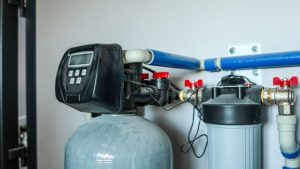
A whole-house water softener uses ion exchange to remove calcium and magnesium before the water reaches any fixture, including the dispenser. Softened water greatly reduces scale buildup in the tank. Our water softener page explains how softeners are sized and installed.
If a whole-house softener isn’t practical, a reverse osmosis system under the sink treats water at the kitchen tap. Reverse osmosis pushes water through a membrane that removes most dissolved minerals. Before connecting any dispenser to softened or reverse osmosis water, confirm that the manufacturer rates the tank for it. You can see how a reverse osmosis system fits in a kitchen, or ask about InstaHot installation.
Not sure how hard your water is? Schedule a free in-home water quality test with Best Home Water Treatment Systems, and we will measure your hardness before recommending anything. Call (951) 737-1500 or learn more about our free in-home water quality test.
How to descale an instant hot water dispenser
Even with treated water, a dispenser benefits from periodic descaling. Check the owner’s manual for the recommended interval, and plan to descale more often if your water is hard.
Most units follow the same general steps. Unplug the dispenser, shut off its water supply, and drain the tank. Then fill it with the descaling solution your manufacturer recommends. Manufacturers differ on which descaler they specify, and common choices are citric acid and white vinegar, so check your manual first.
Let the solution sit for the time the manual specifies, often about an hour, so that it can dissolve the mineral deposits. Then restore the water supply and flush the tank for several minutes until the water runs clear. Descaling removes early-stage buildup, but it cannot reverse heavy scale.
The takeaway for Orange County homeowners
An instant hot water dispenser rewards a little attention. It is a heater working directly on your tap water, so the mineral content affects how well it performs.
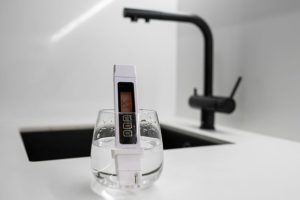
Knowing your water’s hardness is the first step. A test shows whether scale is likely and whether a softener or a reverse osmosis system better fits your home.
Whether you add water treatment, commit to regular descaling, or do both, these steps help your dispenser last longer. To find out where your water stands, schedule a free in-home water quality test, call (951) 737-1500, or contact our team to talk through your options.
Frequently Asked Questions
1. Why is my hot water dispenser spitting steam and water?
Sputtering usually means scale or debris is restricting the valves or the spout aerator, causing steam and hot water to exit unevenly. Descaling the tank and cleaning the aerator often helps, and if it continues, contact a service technician.
2. Can a standard refrigerator filter protect my heating tank?
Usually not. Refrigerator filters and standard carbon cartridges are designed to remove chlorine and improve taste, not to remove dissolved calcium or magnesium, so hardness minerals can still reach the heating tank.
3. Can I use vinegar to descale my instant hot water dispenser?
Some manufacturers allow white vinegar, and others specify citric acid or their own descaler, so follow the instructions in your owner’s manual. In every case, unplug the unit first, let the solution work for the recommended time, and flush the tank until the taste and smell are gone.
4. Do I need a water softener if I have an instant hot water dispenser?
Not necessarily, but you need some way to deal with hardness if your water is hard. A whole-house softener treats all of the water in the home, while a reverse osmosis system treats the kitchen tap. A free in-home water test shows your hardness so you can choose the right approach.
5. Why does my dispensed hot water taste metallic or chalky?
A chalky taste points to mineral scale in the tank. A metallic taste can have several causes, including the water supply and plumbing, so it is worth having a technician take a look. A descaling flush often clears a chalky taste, and if the taste continues, the tank or filter may need service.
6. Does heating water remove hardness?
No. Heating hard water does not remove the dissolved calcium and magnesium. It causes some of the calcium to come out of solution as scale. When water turns to steam in a kettle or a tank, the minerals stay behind and become more concentrated in the water that remains.