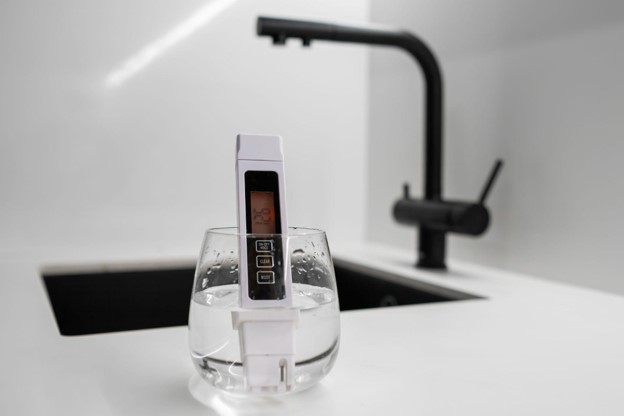
Orange County tap water is safe to drink, and it is also some of the hardest water in Southern California. It averages 18 grains of hardness when it arrives from the Colorado River and Northern California, and about 20 grains when it comes from local wells.
It is disinfected with chloramine rather than chlorine, and the groundwater basin that supplies most of north and central Orange County has been affected by PFAS. Those three things explain most of what you notice at the tap, and each one calls for a different fix.
If you have ever wondered why your shower door is perpetually covered in a white haze, why your skin feels uncomfortably tight, or why your water sometimes smells like a public swimming pool, there is a straightforward explanation for each one. The local districts deliver water that meets every state and federal standard. Meeting those standards is a separate question from how the water behaves once it is inside your house.
Here is where Orange County water comes from, what is in it, and what actually works to treat it at home.
Where Orange County water actually comes from
Before we can talk about what is wrong with the water, we have to look at how it gets here. Southern California is a desert. We simply do not have enough local rainfall to support millions of residents. Because of this, the Orange County Water District relies on a massive, highly engineered blending strategy.
Roughly 85 percent of the water for northern and central Orange County comes from the massive local groundwater basin. The rest of the county relies heavily on imported water purchased from the Metropolitan Water District. This imported water travels hundreds of miles through aqueducts from the Colorado River and the State Water Project in Northern California.
By the time it reaches your street, it has traveled across states, filtered through deep underground rock, and undergone intense industrial chemical treatments. This long, arduous journey is exactly why our local water quality presents so many unique challenges.
How hard is Orange County water?
The most obvious problem with Orange County water is the physical texture. As water flows down the Colorado River and seeps through our local underground aquifers, it acts like a sponge. It dissolves massive amounts of calcium and magnesium from the surrounding earth.
By the time it hits your house, it is essentially liquid rock.
Hardness is measured in grains per gallon, and seven grains is the line where water gets classified as hard. Orange County runs well past it. Yorba Linda Water District reports that the imported supply it receives averages 18 grains per gallon, and that its local groundwater averages 20. The number at your house depends on your city and how much imported versus local water you get that month.
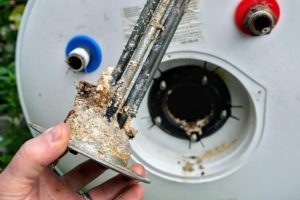
That mineral load has real consequences inside the house. When you heat hard water in a water heater or dishwasher, calcium and magnesium come out of solution and bake onto the heating elements as scale. Scale insulates those elements, so the appliance has to work harder and runs less efficiently over time. It also builds up in showerheads and fixtures, and it reacts with soap to leave the film you see on glass doors and feel on your skin.
Why your water smells like a swimming pool
Orange County’s imported water is treated by the Metropolitan Water District of Southern California, which uses ozone as its primary disinfectant. After treatment, Metropolitan adds chlorine and ammonia to form chloramine, which provides a disinfectant residual as the water travels through miles of distribution pipe. That is why the water reaching most Orange County homes carries chloramine rather than free chlorine.
Chloramine is a mixture of chlorine and ammonia. It is highly stable and does not evaporate easily. This is great for the city because it keeps the water sterile over long distances. But it is terrible for homeowners.
In a hot shower, some of that chloramine leaves the water as a gas, which is where the swimming pool smell in a closed bathroom comes from. It also contributes to skin feeling tight and dry after a shower, since chloramine strips some of the natural oils from skin and hair.
Disinfectants also react with natural organic matter to form disinfection byproducts, and bromide in Colorado River water makes brominated byproducts such as bromoform and bromodichloromethane more likely here than in some regions. Metropolitan uses ozone partly to limit them, and reports historically low levels of disinfection byproducts across its system. The EPA and the state regulate these compounds, and your water provider’s annual water quality report includes measured levels for your area.
PFAS in the Orange County groundwater basin
PFAS are the third piece of the Orange County water picture, and unlike hardness or chloramine, you can’t see, taste, or smell them.
Per and polyfluoroalkyl substances are commonly known as PFAS or “forever chemicals.” These are man-made industrial chemicals used for decades to make nonstick pans, waterproof clothing, and firefighting foam. They are famous for an incredibly strong carbon-fluorine bond that simply does not break down in nature or inside the human body.
The Orange County Water District publishes its PFAS data openly. It reports that these compounds have been detected in very small amounts in parts of the Orange County groundwater basin, which supplies 85 percent of the drinking water for north and central Orange County. More than 100 wells have been affected, 55 are back online, and the district puts the cost of treatment at $1.8 billion over 30 years.
Most of that work happens at the wellhead, before the water reaches your street, and the EPA has finalized national drinking water limits for six PFAS compounds. Homeowners who want a second barrier between the utility’s treatment and the glass on the table usually add certified filtration at the kitchen tap.
How to treat Orange County water at home
The public utility companies are doing exactly what they are legally required to do. But legal compliance doesn’t mean pristine water. If you want truly pure, luxurious water for your family, you have to establish a defense system on your own property.
Here are the most effective ways to upgrade your home water quality.
Whole-house, point-of-entry treatment
If you own your home, the smartest move is to treat the water as soon as it hits your garage. A dual system is usually required to handle Orange County’s complex water profile.
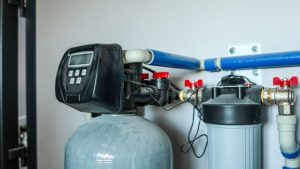
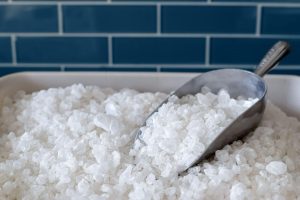
First, you need a high-capacity water softener. This system uses ion exchange resin to physically pull the heavy calcium and magnesium ions out of your water. This protects your tankless water heater, saves your plumbing, and makes your skin feel incredibly soft.
Second, you pair that softener with a whole-house catalytic carbon filter. Standard carbon cannot easily remove the stubborn chloramine used by local cities. Catalytic carbon shatters the ammonia-chlorine bond, stripping harsh chemical odors from your water before it reaches your showers.
Point-of-use treatment for drinking water
While a whole house system protects your infrastructure and your skin, it flows too quickly to stop microscopic forever chemicals. For the water you actually ingest, you need a dedicated under-sink Reverse Osmosis system.
Reverse Osmosis forces your tap water through an impossibly tight membrane. The pores are so small that heavy metals, nitrates, and complex PFAS molecules physically bounce off the membrane and flush down the drain. You get absolute peace of mind knowing the water in your glass is as pure as scientifically possible.
If you rent an apartment and cannot install heavy equipment, you can still protect yourself. Look into countertop Reverse Osmosis units that require no plumbing modifications, or thread an inline carbon filter directly onto your showerhead to at least mitigate the daily chlorine exposure.
Find out what is actually in your water
Everything above describes Orange County water in general. The only way to know what is coming out of your taps is to measure it, because hardness, chloramine levels, and the mix of imported and local water vary by city and by season.
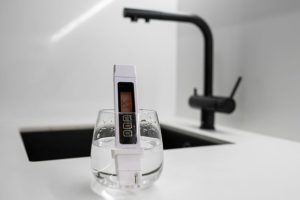
Best Home Water Treatment Systems offers a free in-home water test. A technician measures your hardness in grains per gallon, checks chlorine and chloramine levels, and looks at sediment and total dissolved solids, then walks you through which of the options above your house actually needs. Most homes do not need all of them.
Schedule a free water test and get the numbers for your own address before you spend anything on equipment.
Frequently asked questions
1. Is tap water in Orange County generally safe to drink?
Yes. Local water districts strictly follow EPA guidelines to ensure water is biologically safe. However, safety compliance does not prevent extreme mineral hardness or trace chemical exposure. Many residents choose secondary filtration for optimal taste and absolute peace of mind.
2. Why does my shower water smell so strongly of chemicals?
Cities add disinfectants like chlorine and chloramine to the public pipes to kill bacteria. When this treated water hits the high heat of your shower, the chemicals vaporize into gases, creating that strong swimming-pool odor in your bathroom.
3. Can a standard refrigerator filter remove PFAS forever chemicals?
No. Most basic refrigerator filters use a simple carbon block designed purely to improve taste and catch basic chlorine odors. To reliably remove microscopic PFAS compounds, you need the intense pressure and tiny membrane pores of a Reverse Osmosis system.
4. What is the best way to fix hard water in my home?
The only permanent, reliable way to eliminate hard water is by installing a traditional ion exchange water softener. This machine physically removes heavy calcium and magnesium minerals from the water, protecting your appliances from destructive scale buildup.
5. Do I actually need both a water filter and a water softener?
In Orange County, usually yes. A softener removes the heavy minerals that destroy your plumbing, while a filter removes harsh chemical odors and disinfectants. Using them together provides comprehensive protection for both your skin and your household infrastructure.