When it comes to improving your home’s water quality, installing a water softener is one of the smartest investments you can make. Hard water is a common issue in Orange County, affecting plumbing systems, water heaters, and even the efficiency of soap and detergents. But before you install a new system, there’s an important first step you should never skip: professional water testing.
Water testing doesn’t just confirm that your water is hard, it provides a detailed analysis of your water’s chemistry, ensuring that your water softener is properly sized, correctly calibrated, and tailored to your home’s specific needs.
In this comprehensive guide, we’ll explore why water testing matters, what it measures, and how it ensures your system performs efficiently for years to come.
Why Water Testing Matters Before Water Softener Installation
Most homeowners in Orange County know they have hard water but may not realize that hardness isn’t the only concern. Municipal water sources can contain chlorine, iron, sediment, and even trace contaminants that impact your plumbing, appliances, and overall water quality.
Testing helps uncover these hidden factors. Without it, you might end up with a water softener that doesn’t fully address your home’s needs or works inefficiently.
Top Reasons to Test Water Before Installation
- Proper System Sizing – Water hardness and daily usage determine the correct size of your softener.
- Accurate Hardness Measurement – Prevents over- or under-regeneration cycles.
- Detecting Other Contaminants – Identifies iron, manganese, and chlorine that may require pre-filtration.
- Ensuring Plumbing Compatibility – Confirms the right setup to protect pipes and fixtures.
- Complying with Local Plumbing Codes – Verifies installation meets Orange County regulations.
Best Home Water Treatment Systems provides comprehensive testing services to evaluate all these factors before any installation.
Understanding Orange County’s Water Composition
Orange County’s water comes primarily from two sources:
- Groundwater (Santa Ana Basin)
- Imported water from the Colorado River and Northern California
Both sources are rich in dissolved minerals such as calcium and magnesium, which cause hard water.
The average hardness in Orange County is between 10–20 grains per gallon (gpg), which classifies it as hard to very hard water according to U.S. Geological Survey (USGS) standards.
Water Hardness Scale
| Hardness (gpg) | Classification | Common Effects |
| 0–3.5 | Soft | Excellent performance, no limescale |
| 3.5–7.0 | Moderately Hard | Minor spots, slight buildup |
| 7.0–10.5 | Hard | Limescale on fixtures, reduced efficiency |
| 10.5+ | Very Hard | Major buildup, reduced lifespan of appliances |
Given this data, most homes in Orange County fall within the “hard” or “very hard” range, making softeners essential.
What Does a Water Test Measure?
A professional test examines multiple water quality indicators beyond just hardness. Here’s what’s typically measured during a pre-installation test by Best Home Water Treatment Systems:
1. Water Hardness (Calcium and Magnesium)
This determines how much scale buildup your system will need to address. It’s expressed in grains per gallon (gpg) or parts per million (ppm).
Soft water typically has less than 1 gpg, while water in Orange County averages between 10–20 gpg.
2. Iron and Manganese
These metals cause rust stains, foul odors, and can clog softener valves. Even small traces of iron (0.3 ppm) can cause visible staining.
If present, a pre-filter or iron removal system may be recommended before the softener.
3. pH Level
The pH scale measures acidity or alkalinity. Water with a low pH (<6.5) can corrode pipes, while high pH (>8.5) can cause mineral scaling.
Testing ensures your system maintains balanced, neutral pH for plumbing protection.
4. Chlorine and Chloramines
Municipal water in Orange County is disinfected with chlorine or chloramines. While necessary for safety, these chemicals can damage softener resin and reduce lifespan.
If chlorine levels are high, Best Home Water Treatment Systems may recommend a carbon pre-filter.
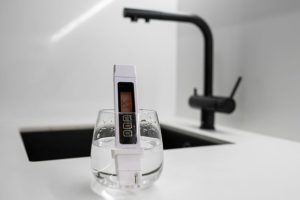
5. Total Dissolved Solids (TDS)
TDS includes all minerals, salts, and metals in water. High TDS (>500 ppm) can affect taste and indicate that your water contains impurities beyond hardness.
Monitoring TDS helps verify the system’s effectiveness after installation.
6. Bacteria or Contaminants (Optional)
For homes using well water or older pipes, additional microbiological testing may be necessary to detect bacteria, nitrates, or lead.
How Water Testing Works: Step-by-Step
If you’re scheduling water testing with Best Home Water Treatment Systems, here’s what to expect:
Step 1: Sample Collection
A certified technician collects water samples from multiple points—typically the kitchen faucet, outdoor tap, and near the main water line.
Step 2: On-Site Testing
Hardness and chlorine levels are tested immediately on-site to provide preliminary results.
Step 3: Laboratory Analysis (if needed)
If iron, manganese, or TDS levels require deeper analysis, samples are sent to a certified laboratory.
Step 4: Results Interpretation
Results are compared to EPA and local Orange County water standards to determine your water quality profile.
Step 5: System Recommendation
Based on your test, technicians recommend the ideal softener size, media type, and any necessary pre-filtration.
What Happens If You Skip Water Testing
Skipping testing might seem like a small shortcut, but it can lead to significant long-term issues:
| Without Testing | Potential Problems |
| Wrong softener size | Inefficient regeneration cycles and wasted water |
| Ignored iron/manganese | Resin fouling, reduced lifespan |
| Chlorine exposure | Resin damage and poor performance |
| Misjudged hardness | Insufficient softening or excess salt use |
| Undetected pH imbalance | Pipe corrosion or buildup |
Simply put, testing prevents future headaches and ensures your investment works as intended.
Local Water Testing in Orange County
Orange County’s water is managed by the Municipal Water District of Orange County (MWDOC), which maintains safe but mineral-heavy water supplies.
However, even though the water meets federal safety standards, that doesn’t mean it’s optimal for your plumbing or appliances. Hardness, chlorine, and TDS levels often exceed what’s ideal for residential systems.
By partnering with Best Home Water Treatment Systems, homeowners receive customized analysis tailored to local water conditions. This ensures your system performs perfectly in Orange County’s unique environment.
The Science Behind Water Softening
To understand why testing matters, it helps to know how a softener actually works.
Ion Exchange Process
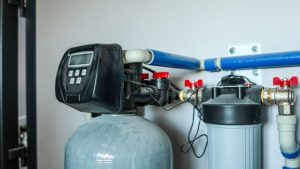
A water softener uses resin beads charged with sodium or potassium ions. As hard water passes through, calcium and magnesium ions are exchanged for sodium/potassium, removing hardness.
Without accurate hardness data, the system cannot calculate proper regeneration intervals—leading to inefficiency or incomplete softening.
Water Softener Filtration Systems: Combining Softening and Purification
Modern systems often combine softening and filtration in one unit.
These dual-function systems remove hardness and filter chlorine or sediment, improving both efficiency and water taste. However, precise testing ensures each filter media type is properly matched to your water composition.
Environmental and Energy Benefits of Accurate Testing
When your system is properly sized and tuned:
- Less salt and water are wasted during regeneration cycles.
- Appliances run more efficiently, reducing electricity use.
- Lower energy bills and a smaller carbon footprint result.
According to the U.S. Department of Energy, water heaters using soft water operate 24% more efficiently than those using hard water—proof that water quality directly impacts energy savings.
Water Testing vs. DIY Kits: Why Professional Testing Wins
While DIY water test kits are available, they’re not as comprehensive or reliable as professional testing.
| Testing Type | Advantages | Limitations |
| DIY Kits | Quick and inexpensive | Limited accuracy; can’t measure all contaminants |
| Laboratory Testing | Certified results; detailed analysis | May require shipping samples |
| Professional Testing (Recommended) | Immediate on-site testing, lab verification, expert recommendations | Slightly longer process but most reliable |
Professional testing from Best Home Water Treatment Systems combines on-site precision with expert advice, ensuring your system is right the first time.
Orange County Water: A Snapshot
| Water Source | Hardness (gpg) | TDS (ppm) | Disinfectant Used |
| Santa Ana Groundwater Basin | 15–18 | 500–650 | Chlorine |
| Colorado River Supply | 16–20 | 650–800 | Chloramines |
This confirms why Orange County homes benefit greatly from comprehensive water treatment before installation.
After Testing: Choosing the Right Water Softener
Once your water is tested, your technician will recommend a softener model based on:
- Hardness level
- Number of household members
- Daily water usage
- Presence of chlorine or iron
- Local plumbing codes
The experts at Best Home Water Treatment Systems ensure your installation complies with all Orange County standards, providing long-lasting performance and reliability.
Test First, Soften Smart
Installing a water softener without proper testing is like taking medication without a diagnosis. You might get partial relief—but not the full solution.
With accurate water testing, you can ensure your new system efficiently tackles Orange County’s unique water challenges. From precise hardness levels to chlorine and TDS detection, testing provides the blueprint for cleaner, softer, and more efficient water throughout your home.
For reliable testing, system design, and professional installation, trust the experts at Best Home Water Treatment Systems. Schedule your comprehensive water test today through our contact page and enjoy lasting protection for your plumbing, appliances, and family.
Frequently Asked Questions
1. Why is water testing important before a water softener?
Water testing ensures your system is properly sized and addresses all water issues, not just hardness. It helps identify chlorine, iron, or pH imbalances that may require additional filtration.
2. What does water testing measure?
It measures hardness, chlorine, pH, iron, manganese, and total dissolved solids (TDS). Some tests may also include bacteria or nitrate analysis for well water users.
3. How often should I test my water?
You should test your water before installation and then every 2–3 years afterward to ensure your system continues to operate efficiently and water quality remains stable.
4. Do all Orange County homes have hard water?
Most do, though hardness levels vary by location. Local water sources contain naturally high mineral content, so testing ensures your system is properly calibrated.
6. How long does a water test take?
Basic hardness and chlorine tests can be done on-site within an hour. More complex analyses, such as iron or TDS, may take 2–3 days for lab verification.
7. Can testing identify taste or odor problems?
Yes. Testing can pinpoint causes of unpleasant tastes or smells, such as sulfur, chlorine, or metallic elements, so appropriate filtration can be installed.
8. Is professional testing worth it compared to DIY kits?
Absolutely. Professional testing provides accurate, certified results and expert guidance, ensuring your investment in a softener is efficient and long-lasting.