We have all stood in the grocery store aisle, staring at the wall of bottled water, wondering why we are paying for something that comes out of our kitchen tap for free. Then, you go home, fill a glass from the sink, and smell it. It smells a bit like a swimming pool. You take a sip, and it tastes… “heavy.”
It is no wonder that so many homeowners in Orange County are looking for a better way. We want water that feels clean, tastes fresh, and doesn’t dry out our skin. The natural solution seems to be a Whole House Water Filter.
But here is where things get confusing. You see advertisements promising “pure water” or “100% contaminant removal.” You might think that once you install a big tank in your garage, your tap water will be as pure as a mountain spring.
The truth is a little more nuanced.
While these systems are incredible pieces of engineering that can transform your home’s water quality, they aren’t magic wands. They are designed to target specific enemies. Understanding what they do remove and just as importantly, what they don’t, is the key to making a smart investment.
In this guide, we are going to strip away the marketing fluff. We will look at the science of filtration in plain English, so you know exactly what you are getting when you turn on the tap.
The Big Picture: How Filtration Works
Before we list the chemicals, we need to understand the mechanism. Most whole house systems use a process called Adsorption (with a “d”).
Think of the filter media (usually activated carbon) like a giant parking lot. As water flows through, certain chemicals are like cars looking for a parking spot. They stick to the carbon and stay there, letting the clean water flow on through.
However, not every chemical wants to park. Some just drive right through. That is why knowing your water quality is so important.
According to a report by the Environmental Working Group (EWG), tap water can contain hundreds of contaminants, but standard municipal treatment only regulates a fraction of them. A whole house system is your “final barrier” against the things the city leaves behind.
What It DOES Remove
When you install a quality system, you will notice immediate changes. Here are the primary targets that these systems are excellent at stopping.
1. Chlorine and Chloramine
This is the number one reason people buy these systems.
If you live in Orange County, your water is treated with chlorine or chloramine (a mix of chlorine and ammonia) to kill bacteria in the miles of pipes under the city. It keeps you safe from disease, but it is terrible for your home.
- The Problem: It smells bad, tastes bad, and dries out your skin and hair. It can also fade your laundry.
- The Fix: High-quality carbon filters are fantastic at removing 97% or more of chlorine. This is why filtered water tastes so much better and why your skin feels softer after a shower.
2. Sediment, Dirt, and Rust
Have you ever unscrewed the little screen (aerator) on the tip of your kitchen faucet and found little rocks or sand? That is sediment.
- The Source: It comes from aging city pipes, water main breaks, or just natural sand in the water supply.
- The Fix: A Pre-Filter acts like a net. It catches the physical dirt before it enters your home’s plumbing. This protects the valves in your washing machine and dishwasher from getting clogged.
3. Volatile Organic Compounds (VOCs)
This is a fancy term for “chemicals that turn into gas.” This includes things like:
- Pesticides and herbicides from agricultural runoff.
- Industrial solvents.
- Oil and gasoline byproducts.
Because these are carbon-based chemicals, they are highly attracted to the carbon in the filter. The filter soaks them up like a sponge.
4. The “Bad” Taste and Odor
Sometimes water just smells “off.” Maybe it is musty, or earthy. This is often caused by decaying organic matter (like leaves) in the reservoir. A whole house filter acts like a deodorizer, stripping out these organic compounds so your water smells like… nothing. Which is exactly what water should smell like.
What It Doesn’t Remove
This is the part most salespeople gloss over. A standard whole house carbon filter is not a “black hole” that eats everything. There are some things that pass right through it.
1. Total Dissolved Solids (TDS)
This is the biggest misconception we see.
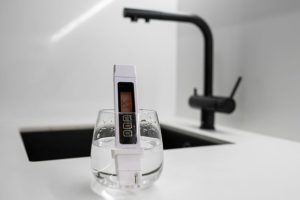
People install a whole house filter, then they use a cheap “TDS Meter” (those little tester sticks) and panic because the number hasn’t gone down.
Here is the reality: Whole house filters are designed to remove chemicals, not dissolved minerals.
- If your water has Calcium, Magnesium, or Potassium, those minerals are still there.
- And that’s usually a good thing! Minerals are healthy for you to drink. If you want to remove TDS completely (to get “empty” water), you need a Reverse Osmosis system, not a whole house filter.
2. Fluoride
Many cities add fluoride to the water for dental health. Fluoride is a very tricky chemical to remove.
- Standard carbon filters do not remove fluoride efficiently.
- If you want fluoride-free water throughout your entire house, you need a special tank filled with a media called “bone char” or specialized ceramic media. It is an upgrade, not a standard feature.
3. Bacteria and Viruses
This is crucial.
- Standard Filters: Do NOT kill bacteria. In fact, if you have unsafe well water, bacteria can grow inside a carbon filter.
- The Exception: If your system includes a UV Light, then it kills bacteria. But the carbon tank itself does not.
- Note: If you are on city water in Orange County, your water is already disinfected, so this isn’t usually a worry. But for owners, it is vital.
4. Hardness Minerals (Sort of…)
This brings us to a very important distinction: Conditioning vs. Softening.
If you buy a salt-free Whole House Water Conditioner, it does not remove the calcium minerals.
Instead, it changes them. It alters the structure of the mineral crystal so that it cannot stick to your pipes.
- The Result: You don’t get scale buildup, but the minerals are still in the water. You might still see a little white dust when water evaporates, but it wipes right off. It doesn’t form that rock-hard crust.
Breaking It Down: The Removal Chart
To make this easy to digest, here is a simple comparison of what gets trapped and what gets through a standard Whole House Carbon System.
| Contaminant | Removed? | Notes |
| Chlorine / Chloramine | YES | Highly effective. Improves taste and smell instantly. |
| Sediment / Rust | YES | Trapped by the pre-filter stage. |
| Pesticides (VOCs) | YES | Soaked up by the activated carbon. |
| Calcium (Hardness) | NO | Conditioned to stop sticking, but not removed physically. |
| Fluoride | NO | Requires a specialized filter upgrade. |
| Bacteria / Viruses | NO | Requires a UV Light add-on. |
| Lead / Heavy Metals | SOME | Needs a specific filter rating (KDF or specialized carbon). |
The Difference Between “Whole House” and “Drinking Water” Systems
This is where the strategy for your home comes in. Many homeowners use a “Hybrid Approach.”
Layer 1: The Whole House System (The Guard Dog)
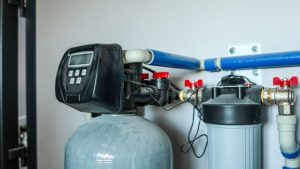
This system goes in your garage. Its job is to make the water safe for bathing and plumbing.
It takes out the chlorine (which is bad to inhale in the shower) and the dirt. It conditions the water to protect your pipes. It treats 100% of the water entering your home.
Layer 2: The Reverse Osmosis System (The Surgeon)
This is a small unit that usually goes under your kitchen sink.
It is much slower and more precise. It removes everything—fluoride, nitrates, lead, sodium, and dissolved solids.
- Why not use this for the whole house? Because it is too slow and wastes some water. You don’t need “surgical grade” water to flush your toilet or water your lawn. You only need it for drinking and cooking.
By combining these two, you get the best of both worlds: high-volume, clean water for the shower, and ultra-pure water for your coffee.
Expert Insight: Why “One Size” Does Not Fit All
You might see generic filters online claiming to do it all. Be careful.
Water quality changes from neighborhood to neighborhood. The water in Anaheim might have higher hardness levels than the water in Irvine. The water in a canyon community might have more sediment.
At Best Home Water Treatment Systems, we believe in testing before we install. You wouldn’t take medicine without a diagnosis, right? You shouldn’t install a filter without knowing what is in your water.
We look at local water reports and perform on-site tests to see if you need:
- Standard Carbon (for taste/odor).
- Catalytic Carbon (for stubborn chloramines).
- KDF Media (for heavy metals).
The Importance of Maintenance
Even the best system in the world won’t work if you ignore it.
Remember that “parking lot” analogy? Eventually, the parking lot gets full. When the carbon is saturated with chemicals, it stops working.
- Pre-Filters: Change these every 3–6 months. If you don’t, your water pressure will drop because the filter is choked with dirt.
- Main Tank: These usually last 3–5 years depending on usage. If your water starts smelling like a pool again, it’s time for a service.
Do You Need a Whole House Filter?
If you are on the fence, ask yourself a few questions:
- Does my skin feel itchy or tight after a shower?
- Do I hate the taste of tap water?
- Am I worried about breathing in chlorine steam?
- Do I want to protect my expensive tankless water heater from sediment?
If you answered “yes” to any of these, a whole house system is a game-changer. It is not just about luxury; it is about protecting the biggest investment you own (your home) and the most important thing you have (your body).
Making the Right Choice for Your Home
Navigating the world of water treatment can feel like learning a new language. There are microns, resins, and flow rates to consider. You don’t have to figure it out alone.
The goal is to find a balance. You want a system that removes the harmful chemicals and physical dirt, while leaving the healthy minerals that make water taste good.
If you are curious about what specific systems might look like for your home, you can browse Our Products to get an idea of the technology available.
Ready for Better Water?
You use water every single day. You shower in it, cook with it, and wash your clothes in it. It shouldn’t be a source of frustration or worry.
If you live in Orange County and want to know exactly what is in your water and how to fix it, we are here to help.
Best Home Water Treatment Systems has been helping locals get cleaner, safer water for years. We don’t just sell boxes; we design solutions.
If you want to speak to a human who can answer your specific questions, just Contact Us.
Stop drinking the “pool water.” Let’s get your home the water quality it deserves.
Frequently Asked Questions
- Will a whole house filter lower my water pressure?
This is a common fear. If the system is sized correctly for your home (based on the number of bathrooms and pipe size), you should see zero noticeable drop in pressure. Pressure drops usually happen only if the system is too small for the house, or if the pre-filter hasn’t been changed in a long time and is clogged with dirt.
- Can I drink from any tap in the house with a whole house filter?
Yes! That is the biggest benefit. You can drink from the bathroom sink in the middle of the night without worrying. However, remember that while the water is filtered of chlorine and chemicals, it still has dissolved minerals (TDS). If you prefer that “ultra-light” taste of bottled water, you might still want an under-sink Reverse Osmosis unit in the kitchen.
- Does this system replace a water softener?
Not exactly. A filter removes dirt and chemicals. A softener removes calcium.
However, many modern systems are hybrids. They filter the chemicals AND condition the minerals to prevent scale. If you have extremely hard water (which is common here), you need a system that addresses hardness, either through salt-free conditioning or traditional softening. A simple carbon filter alone won’t stop white scale buildup.
- How do I know if the filter is working?
Since you can’t see the chemicals, it is hard to tell visually. The best indicator is your nose. If the smell of chlorine returns, the filter is exhausted. Also, we recommend testing the water annually. We can stop by and run a quick test to see if the system is still performing at its peak.
- Is a whole house filter good for my garden?
Yes and no. Plants actually like minerals, but they hate chlorine. Chlorine can kill the beneficial bacteria in the soil. So, removing chlorine is great for your garden. However, if you use a traditional salt-based softener, you should not use that water for plants, as the sodium will kill them. A salt-free conditioner or standard carbon filter is perfectly safe for your lawn and garden.
- Do these filters remove “Forever Chemicals” (PFAS)?
Standard carbon filters can reduce PFAS, but they vary in effectiveness. If PFAS is a major concern for you, you need a system with “Activated Carbon” that has a high iodine rating, or specialized anion exchange resin. If you are worried about this specific contaminant, let us know so we can recommend the heavy-duty option designed for emerging contaminants.