If you have spent any time researching home water filtration lately, you’ve likely run into a frustrating paradox. On one website, a professional plumber will swear that you absolutely need a multi-stage Whole-House Filter system installed in your garage to protect your family. Then, you click over to a home improvement forum, and an experienced DIYer will confidently tell you that a simple Under-Sink Filter beneath your kitchen counter is all you really need.
It feels like trying to choose between buying a heavy-duty security system for your entire property or just installing a deadbolt on the front door. Both keep you safe, but they operate on completely different scales.
When you are spending your hard-earned money to protect your home and your health, making the wrong choice is incredibly easy. You either buy a massive whole-house system when all you really wanted was better-tasting morning coffee, or you slap a small under-sink filter under the counter and wonder why your shower water is still ruining your hair and making your skin itch.
The secret to choosing the right system isn’t about finding the “best” technology—it’s about understanding where and why you are treating your water. Let’s strip away the marketing fluff and look at the real-world differences between whole-house and under-sink filtration so you can build the exact defense system your home actually needs.
Defining the Boundaries: Point-of-Entry vs. Point-of-Use
To make an informed decision, we have to look at the structural layout of your home’s plumbing. Water filtration systems are divided into two primary categories based on where they intercept your plumbing:

Whole-House Systems (Point-of-Entry)
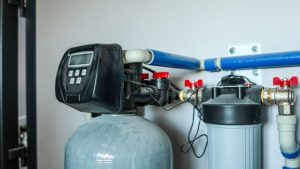
As the name implies, a whole-house system is installed at the main water line where water first enters your property. This is usually in the garage, basement, or a dedicated utility closet. This means every single drop of water that flows through your home has passed through this filter. When you flush a toilet, run the washing machine, or turn on the backyard hose, that water has been pre-filtered.
Under-Sink Systems (Point-of-Use)
An under-sink system is a localized, dedicated specialist. It intercepts the cold water line directly beneath a specific tap—almost always your primary kitchen sink. The water flowing to your bathroom sinks, showers, and laundry machines remains completely untouched by this filter. It only purifies the water that flows out of a dedicated faucet right where you cook and drink.
Sizing Up Your True Needs: The Utility vs. Consumption Debate
The easiest way to figure out which camp you belong in is to ask yourself a simple question: Are you trying to protect your plumbing and skin, or are you trying to protect your drinking glass?
When to Go Whole-House
You need a whole-house system if your primary complaints are about the utility water running through your home. If you live in an area with heavy municipal disinfection, your tap water likely smells like a public swimming pool. That chlorine gas evaporates in a hot shower, drying out your skin, making your hair brittle, and irritating your lungs.
Furthermore, if your local water is full of heavy sediment, rust, or sand from an aging public grid, those physical particles will slowly destroy the internal valves of your dishwasher, clog up your showerheads, and ruin your water heater. A whole-house carbon and sediment block stops these problems at the perimeter, acting as a structural shield for your property.
When to Go Under-Sink
You need an under-sink system if your primary concern is the chemical purity of what you ingest. While a whole-house carbon filter is excellent at removing chlorine smell and large sediment, the pores are generally too large to stop microscopic chemical threats.
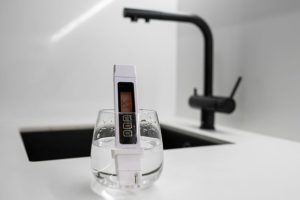
If your water report shows heavy metals like lead leaching from old municipal mains, agricultural nitrates from nearby farms, or synthetic “forever chemicals” (PFAS) in the groundwater table, a whole-house filter won’t give you absolute protection. You need the tight, high-pressure semi-permeable membrane of an under-sink Reverse Osmosis (RO) system to physically block those microscopic toxins at the final point of consumption.
Sizing Up the Finances: Upfront Costs vs. Long-Term Maintenance
Let’s talk about the dollars and cents, because the financial lifecycle of these two systems is completely inverted.
- The Whole-House Investment: A professional whole-house system has a higher upfront cost, including professional installation. However, because these systems utilize massive tanks filled with dense filtration media, they only require maintenance once every few years or an annual pre-filter swap.
- The Under-Sink Investment: An under-sink Reverse Osmosis system is much more accessible upfront. But because these systems are doing the microscopic heavy lifting, they
rely on a sequence of smaller, highly intricate cartridges. You will need to climb under your sink to change these filters every 6 to 12 months to prevent the system from clogging and losing pressure.
The Ultimate Blueprint: Why the Best Answer is Often “Both”
For many modern homeowners, choosing between a whole-house filter and an under-sink filter is actually a false choice. Because they target completely different aspects of water quality, they work best as a team.
In the plumbing industry, we call this a complete home water strategy. The whole-house system acts as the linebacker—it takes the initial hit, scrubbing out the heavy chlorine, sand, and rust so that your skin is protected in the shower and your expensive appliances don’t clog up with debris.
Then, because the whole-house filter has done the dirty work, the water arriving at your kitchen sink is already pre-cleaned. This allows your under-sink Reverse Osmosis system to focus exclusively on removing trace heavy metals and PFAS without getting overwhelmed by raw sediment. This dual-layer approach effectively triples the lifespan of your delicate under-sink filters while giving your family the ultimate standard of both structural safety and drinking purity.
Choose the Right Water Treatment System for Your Home’s Specific Needs
At the end of the day, you don’t have to guess which water treatment technology is right for your property. Look at the evidence your house is already giving you. If your main frustrations are white mineral crust on your faucets, stinky shower water, and dry skin, focus your budget on a whole-house point-of-entry system. If your only goal is ensuring your children are drinking completely pure, toxin-free water, start with an under-sink Reverse Osmosis specialist.
Taking control of your water quality isn’t about buying into empty marketing hype—it’s about understanding the specific physics of your home and protecting your family from the structural and chemical realities of public infrastructure.
Frequently Asked Questions
- Will a whole-house water filter lower the TDS of my drinking water?
No. Whole-house carbon and sediment filters are designed to capture physical particles and chemical odors. They cannot reduce Total Dissolved Solids (TDS) because dissolved minerals like calcium, magnesium, and heavy metals are small enough to pass right through them.
- Can I connect an under-sink Reverse Osmosis system to my refrigerator?
Yes, this is highly recommended. During a professional installation, a technician can easily run a flexible line from the under-sink RO storage tank directly over to your refrigerator’s ice maker and water dispenser, giving you crystal-clear, slow-melting ice cubes.
- Do whole-house filtration systems cause a drop in water pressure?
If the system is properly sized for your home’s square footage and plumbing diameter, you won’t notice a pressure drop. However, installing a low-flow system on a high-demand home will cause a major bottleneck in your showers.
- I rent an apartment. Is a whole-house system an option for me?
Generally, no. Whole-house systems require cutting directly into the building’s main water line, which landlords rarely allow. As a renter, your best options are under-sink systems or inline shower filters that can be uninstalled easily when you move out.
- Why can’t I just use a whole-house system for everything?
While a whole-house filter protects your plumbing and skin, making a whole-house filter tight enough to trap microscopic toxins like lead or PFAS would completely destroy your home’s water pressure. True purification requires the concentrated focus of an under-sink unit.
- How often do whole-house filters actually need to be changed?
The main tank media inside a high-quality whole-house system typically lasts between 5 to 10 years before it needs replacement. However, if the system includes a small sediment pre-filter, that cartridge must be swapped every 6 to 12 months.