You buy a brand new washing machine and fully expect it to run well for the next ten or fifteen years. You spend real money on a top of the line water heater so your family never has to experience the shock of running out of hot water during busy morning showers.
Then, just a few short years later, things start failing.
The washing machine begins making a horrible grinding noise and completely fails to drain. The water heater starts popping and banging in the middle of the night, and your monthly utility bills inexplicably skyrocket.
Faced with these frustrations, most homeowners immediately blame the appliance manufacturer. We tend to assume that things simply are not built the way they used to be. In millions of homes across the country, however, the manufacturer is not the actual problem. The root cause of the destruction is flowing right out of your kitchen tap.
Hard water is water carrying a remarkably high concentration of dissolved calcium and magnesium, and it is the single most common cause of premature appliance failure. It looks completely clear and tastes perfectly normal, but those invisible minerals settle out and solidify inside every water heating or water moving machine in your home. In Southern California, where the municipal water supply is among the hardest in the nation, the buildup is measurable and destructive within just a few years.
Let us break down the exact science of mineral scale, look at precisely what happens inside your expensive appliances, and explore how a whole house water softener prevents this scale from forming in the first place.
What is hard water, and where does it come from?
To understand how ordinary water can break solid steel and heavy duty plastic machinery, we first need to look at the geographical journey your water takes. Before water reaches your local municipal treatment plant or your private well, it spends an enormous amount of time traveling underground and across vast distances.
As groundwater filters down through the earth, it passes through miles of soil, limestone, and chalk deposits. Water is known as the universal solvent. This means it constantly dissolves and absorbs the raw materials it touches. When water moves through natural limestone deposits, it picks up massive amounts of calcium and magnesium.
These dissolved minerals are exactly what make water “hard.”
Hardness is measured in grains per gallon or in milligrams per liter of calcium carbonate. To put things in perspective, the U.S. Geological Survey classifies any water measuring above 180 milligrams per liter as “very hard.”
The Metropolitan Water District of Southern California reported an average of 270 milligrams per liter at its Diemer and Weymouth treatment plants in its 2025 annual water quality report. That translates to roughly 16 grains per gallon. That number is well beyond the very hard threshold, and it is the exact water that arrives at most homes across Orange County and the Inland Empire every single day.
Municipal treatment facilities do not remove these minerals. City treatment plants are built specifically to make water safe to drink, meaning their primary job is to disinfect the supply and control regulated biological contaminants. Calcium and magnesium are neither harmful to ingest nor federally regulated, so they pass right through the treatment phases and arrive at your home completely intact.
How heat turns dissolved minerals into limescale
It is important to note that calcium and magnesium are not harmful to drink. In fact, your body needs both of these minerals for healthy bone density. The structural problems for your house only begin when those minerals are subjected to heat or evaporation inside your plumbing system.
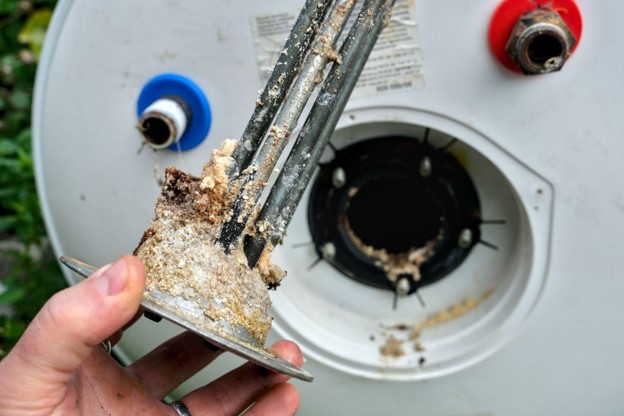
When hard water sits quietly in a cold pipe, the minerals remain safely dissolved in the water. But the very moment you introduce high temperatures, the chemistry of the water changes drastically. Heat causes the dissolved calcium and magnesium to separate from the liquid and crystallize. They immediately bond to the nearest hot surface and form a thick, rock hard crust known to plumbers as limescale.
This scale buildup is the exact same chalky white ring you see forming around your bathtub drain and the crusty white dots that chronically clog your bathroom showerhead. The exact same deposit forms inside the enclosed, dark spaces of the appliances you cannot see into, and it builds up a little more every single time those machines run.
How hard water damages each appliance in your home
Every single appliance that uses water is negatively affected by mineral buildup, but water heating machines always show the most severe damage first. Here is a detailed look at what hard water does to each specific machine in your house.
Water heaters
Your water heater is the most expensive plumbing appliance in your house, and it is almost always the first to show the symptoms of hard water damage.
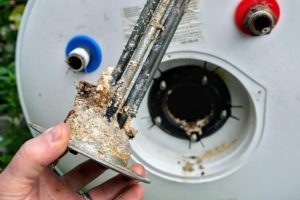
As water is heated inside the tank, the calcium crystallizes and settles heavily to the bottom. Over the course of a few years, this process creates a massive, solid layer of sediment at the base of the water heater. If you have a traditional gas heater, the burner is located at the very bottom of the tank. That means the burner now has to heat a thick layer of solid rock before it can even begin heating the water sitting above it.
That extra mechanical work shows up directly on your utility bill. A Department of Energy study measured hard water dropping the efficiency of a gas storage water heater from 70.4 percent to 67.4 percent over the equivalent of just two years. The study also showed hard water dropping the efficiency of tankless gas units from 80 percent down to 72 percent before they completely failed at 1.6 years without routine deliming maintenance.
The strange popping and banging noises you hear at night are actually pockets of steam struggling to escape from beneath that heavy layer of sediment. Over time, this intense heat stress can warp and crack the bottom of the tank. A failed tank empties its entire contents wherever it stands, which in most Southern California homes means a flooded garage, a ruined hallway closet, or serious water damage to the side of the house.
Dishwashers
A modern dishwasher relies on tiny, high pressure nozzles to spray hot water over your plates and silverware. Hard water scale actively clogs those delicate spray arms. As the holes get progressively smaller, the internal water pressure drops and the machine loses its physical ability to clean your dishes effectively.
Furthermore, the heating element at the bottom of the dishwasher becomes completely coated in a thick white crust. This ruins the appliance’s drying cycle. The minerals also react very poorly with commercial dish detergents. Instead of creating a rich, soapy lather, the calcium bonds with the soap to form a sticky film. This is why you often pull supposedly clean glassware out of the machine only to find it covered in a permanent, cloudy haze.
Washing machines
Washing machines are highly sensitive to mineral buildup and internal friction. Hard water severely shortens the life of the rubber seals around the loading door and degrades the internal intake valves, causing them to dry out, crack, and leak far sooner than they should.
The real mechanical damage happens near the water pump. Calcium buildup creates severe friction on the internal moving parts. The machine is forced to work much harder to push water through partially clogged hoses, which puts a constant, heavy electrical load on the drive motor. Your expensive clothes take a major hit too. The hard minerals trap dirt and soap residue inside the fabric fibers, leaving your bright white fabrics looking dingy gray and causing them to wear out and tear much faster.
Small Kitchen Appliances
Do not forget to protect the smaller machines sitting on your kitchen counter. Coffee makers and electric kettles are frequently the first things to fail in a home plagued by hard water. The internal heating tubes inside a premium coffee maker are incredibly narrow. It takes only a tiny amount of mineral scale to block the water flow entirely, leaving you with a broken machine and a bitter, under extracted cup of coffee.
How a water softener removes hard water minerals
You absolutely cannot fix a hard water problem with a standard carbon water filter. A typical water filter is only designed to catch physical dirt and chemical chlorine. Because calcium and magnesium are dissolved in the water at a microscopic, molecular level, they pass right through regular carbon filters completely untouched.
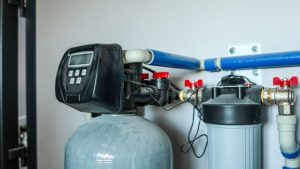
A water softener is a dedicated whole house system that removes dissolved calcium and magnesium from your water supply through a process called ion exchange. By doing this, it prevents scale from ever forming inside your pipes and appliances. It does much more than just filter the water. It physically extracts the destructive rocks out of the liquid before they can reach your plumbing.
Understanding How Ion Exchange Works
A traditional water softener consists of a tall mineral tank and a separate, wider brine tank filled with salt. The tall mineral tank is packed tightly with thousands of tiny, negatively charged plastic resin beads.
Calcium and magnesium molecules carry a positive electrical charge.
When your hard tap water flows into the softener tank, the positively charged hard minerals are immediately drawn to the negatively charged resin beads. The attraction is entirely electrostatic, relying on the exact same scientific principle that pulls opposite magnetic charges together. The minerals stay bound tightly to the plastic beads, and completely softened, mineral free water flows out of the tank and into your home.
The Importance of the Regeneration Cycle
Eventually, those little plastic resin beads get completely covered in calcium. They simply cannot hold any more minerals. When this happens, the system automatically triggers a self cleaning cycle known as regeneration.
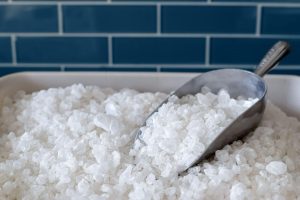
This is exactly where the salt comes in. The system pulls highly concentrated saltwater brine from the salt tank and washes it over the resin beads. The sodium in the brine is concentrated enough to completely displace the calcium and magnesium, aggressively forcing them off the beads. The system then flushes the dissolved hard minerals safely down the drain, leaving the resin beads clean, fully recharged, and ready to work again.
Protecting Your Appliances Starts With a Water Test
You do not have to accept early appliance failure and expensive plumbing repairs as a normal cost of owning a home in Southern California. The same Department of Energy research mentioned earlier clearly highlighted that treating hard water results in a 25 to 40 percent longer lifespan for your major household appliances.
If you find yourself constantly scrubbing the scale off your showerhead or replacing expensive kitchen appliances early, the logical next step is finding out exactly how hard your water actually is. A properly sized water softener removes those minerals at the source, long before they can reach your internal plumbing.
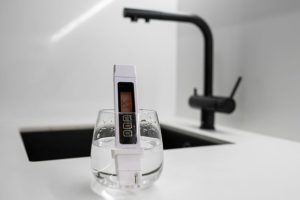
Professionals do not guess at system size. The process begins by testing your water first to measure the specific hardness in grains per gallon, which allows for sizing the system perfectly to your home’s unique demands. If your home is located in Orange County, the smartest next step you can take to protect your property is to schedule a free water test.
Conclusion: Securing Your Home and Your Wallet
Owning a home is a massive financial investment, and the appliances you rely on daily represent a significant portion of that investment. Allowing liquid rock to slowly destroy your water heater, ruin your dishwasher, and inflate your monthly energy bills is a preventable tragedy.
By understanding the unique, incredibly hard water profile of Southern California, you can take proactive steps to protect your property. A whole house water softener is not just a luxury upgrade. It is an essential defensive shield that protects your plumbing infrastructure, saves you money on premature replacements, and ensures that your home runs smoothly and efficiently for decades to come.
Frequently asked questions
1. How do I know if my home has hard water?
The most common signs of hard water are chalky white spots on clean dishes, soap that will not lather properly, crusty buildup around your faucets and showerheads, and laundry that feels stiff and scratchy. A drugstore test strip gives you a rough reading. In Southern California, the more useful question is not whether you have hard water but exactly how hard it is, which a professional water test measures precisely in grains per gallon.
2. Does a water softener add a lot of salt to my drinking water?
No. The ion exchange process leaves only a very small amount of sodium behind, and the exact amount depends on how hard your incoming water is. An eight ounce glass of softened water typically contains less sodium than a single slice of plain white bread.
3. Will a water softener remove the scale that is already in my pipes?
Partly, and very slowly. Softened water is completely empty of calcium and magnesium, so over time it can gradually dissolve some of the existing scale already lining your pipes. However, it is not a rapid descaling treatment. A water heater that already holds a thick, solid sediment layer usually needs to be professionally flushed or completely replaced.
4. How long does a water softening system actually last?
With basic routine maintenance and regular salt refills, a high quality water softener typically runs perfectly for 10 to 15 years before the internal resin beads need replacing.
5. Can I use potassium instead of salt in my water softener?
Yes. If you are strictly limiting your sodium intake or you plan to use softened water on a sensitive outdoor garden, you can fill the brine tank with potassium chloride pellets instead of traditional sodium chloride. A salt-free water conditioner is another great option worth comparing.
6. How much does water softener installation cost in Orange County?
The total cost depends heavily on how hard your water is, the overall size of the home, and whether the system is salt-based or salt-free. Professionals publish full cost breakdowns for Orange County homes to keep things transparent. The water test always comes first, either way, because sizing the system correctly determines the final price.
7. How hard is the water in Southern California?
It is very hard by any standard measure. The Metropolitan Water District of Southern California reported an average hardness of 270 milligrams per liter, which is roughly 16 grains per gallon, at the major treatment plants supplying much of Orange County. For context, anything above 180 milligrams per liter is officially classified as very hard.