Water softener maintenance comes down to four habits: check the salt level once a month, break up any salt bridge you find, deep clean the brine tank about once a year, and protect the resin bed from chlorine, chloramine, and iron. Many softeners that seem broken are simply overdue for one of these tasks.
You stepped into the shower this morning, grabbed your favorite bar of soap, and immediately noticed a problem. There were no rich, fluffy bubbles. Instead, the soap felt sticky and left a strange friction on your skin. Later in the day, you pulled your favorite wine glasses out of the dishwasher only to find them covered in a cloudy, chalky white haze.
You know exactly what these signs mean. Hard water has somehow made a triumphant return to your home.
You walk out to the garage or utility closet and stare at your water softener. It is plugged in. The digital screen is glowing. But for some reason, it has stopped doing its job. This is the moment when many homeowners assume the entire machine is broken and schedule a service call. Before you do, check the basics. In many cases, the machine is not broken at all. It simply needs a little basic maintenance.
Buying a water treatment system is a lot like buying a car. You cannot just drive it off the lot and expect it to run flawlessly for 10 years without ever changing the oil or checking the tire pressure. Your softening system works every day to pull dissolved calcium and magnesium out of your water before they reach your plumbing. To keep doing that job effectively, it needs your help.
The good news is that water softener maintenance is simple once you understand the basic mechanics. You do not need a plumbing license or special tools. You just need to know what to look for.
In this guide, we will walk you through maintaining your salt levels, brine tank, and resin bed so your system keeps delivering soft water for years to come.
How a water softener works: the resin tank and the brine tank
To maintain the machine properly, you need to understand the two main components sitting in front of you. Most systems have two distinct tanks.
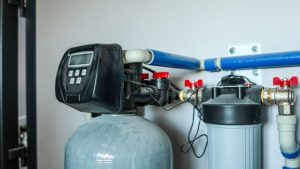
The first is the tall, skinny cylinder known as the mineral tank or the resin tank. This is where the actual water treatment happens. It is packed full of millions of tiny plastic resin beads. These beads carry a negative charge and hold loosely attached sodium ions. As hard water flows through the tank, the beads grab the positively charged calcium and magnesium and release sodium in exchange, trapping the hardness minerals before they reach your home’s plumbing. This process is called ion exchange.
The second part is the shorter, wider bin sitting right next to it. This is the brine tank. Its only job is to hold salt and a little water. When the resin beads in the tall tank get completely covered in hard minerals, the system pulls highly concentrated saltwater from the brine tank to wash the beads clean and recharge them with sodium. This cleaning cycle is called regeneration.
If you neglect either tank, the entire process shuts down. Let us look at how to keep both of them in perfect working order.
How to manage water softener salt
The most frequent interaction you will have with your system is adding salt. It sounds foolproof, but improper salt management is one of the most common reasons a softener stops working.
Which water softener salt is best?
Walk down the aisle of any home improvement store, and you will see several different types of salt bags. Do not just grab the cheapest bag on the shelf. Salt quality directly affects your machine’s health.
- Evaporated salt pellets: This is the best option for most systems. Evaporated pellets are manufactured to be practically 100 percent pure sodium chloride. Because they are so pure, they dissolve cleanly and leave almost zero dirt or residue behind in the bottom of your tank.
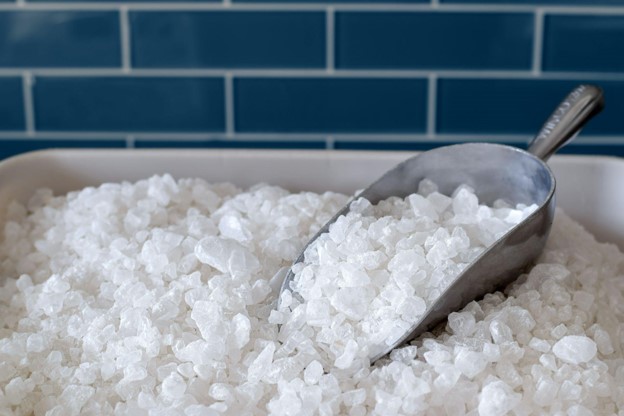
- Solar salt: This salt is created by evaporating seawater in the sun. It is generally sold in crystal form. While it is more affordable than evaporated pellets, it usually contains a slightly higher level of natural impurities. If you use a lot of water, these impurities can build up over time.
- Rock salt: Avoid using rock salt. It is mined directly from the earth and contains far more insoluble minerals and debris than refined salt. Over time, that residue settles into a thick sludge at the bottom of the brine tank, where it can clog the brine valve and force more frequent cleanings.
How much salt should be in your water softener?
Many homeowners make the mistake of filling the bin all the way up to the absolute top rim. They do this to avoid carrying heavy bags every month. It creates more problems than it solves.
When you overfill the bin, the weight of the salt crushes the layers at the bottom. Combined with the natural humidity in your garage or side yard, this causes the salt to clump together into a solid, impenetrable brick.
The golden rule of salt management is to keep the bin about half full, with the salt always sitting at least three or four inches above the water line. Keeping the level lower keeps the salt loose and dissolving perfectly when the machine needs it. Make it a habit to check the level on the first day of every month.
What is a water softener salt bridge?
Even if you buy the best pellets available, humidity and temperature swings can occasionally cause a severe malfunction known as a salt bridge.
A salt bridge is a hard, solidified crust of salt that forms across the entire width of the bin. It creates a dome. Beneath the crust is an empty gap between the salt and the water. When you open the lid to look inside, it appears that the bin is completely full of salt. But in reality, the salt is suspended in the air, completely separated from the water below it.
Because the salt never touches the water, the machine cannot create the brine solution needed to clean the resin beads. Within a few days, hard water will begin flowing through your pipes again.
How to check for and break a salt bridge
If your water suddenly turns hard but your salt bin looks full, you must test for a bridge.
Take a long broom handle and carefully push it down into the center of the salt. If the broom handle hits a hard, cement-like layer just a few inches down, you have found a bridge.
To fix it, take that same broom handle and firmly tap the crust’s surface. Don’t use extreme force or swing a hammer, as you don’t want to puncture the tank’s plastic walls. Just apply steady, firm pressure with the blunt end of the broomstick until the crust fractures and collapses into the water below. Once the bridge falls, the system will immediately begin dissolving the salt again.
How to clean your brine tank once a year
Even with the highest-quality evaporated pellets, a tiny amount of dirt and debris will slowly accumulate at the bottom of the bin over a year. If you let this sludge build up for too long, it can get pulled into the brine line and clog the injector and control valve.
Plan to deep clean the brine tank about once a year.
The best time is right before you need to add a new load of salt, when the bin is mostly empty. Use a small plastic scoop to remove the remaining loose salt. You can save this salt in a bucket to put back in later. Once the salt is gone, use a wet vacuum to suck out the remaining water and sludge sitting at the bottom.
Check your owner’s manual first, since some manufacturers recommend a specific cleaning solution. If yours does not, take a bucket of warm water and a small squirt of standard liquid dish soap, and use a long brush to scrub the interior walls and base of the tank. Rinse the tank thoroughly with clean water, vacuum it out one last time, and then add your fresh bags of salt along with a few gallons of clean water to restart the process.
How to protect and clean water softener resin
We have spent a lot of time discussing the salt, but the actual heroes of this operation are the millions of tiny resin beads sitting inside the tall mineral tank.
These beads are durable. Under normal conditions, they can last 10 years or more. But two major enemies can wear them out early: the disinfectants in city water and dissolved iron.
If you are on city water, your utility adds a disinfectant to keep bacteria out of the water supply. Much of the imported water in Southern California is disinfected with chloramine, a compound of chlorine and ammonia that the Metropolitan Water District of Southern California adds at its treatment plants. Chlorine and chloramine both help keep drinking water safe, but over years of contact they oxidize resin beads, causing them to swell, soften, and lose capacity. The best protection is a whole-house carbon filter installed before your softener. If your water contains chloramine, ask about catalytic carbon, which removes chloramine more effectively than standard carbon.
If your home uses a private well, your main enemy is iron. When iron-heavy water enters the system, the iron coats the outside of the resin beads like a rusty jacket. Coated beads can no longer exchange ions, so they stop capturing calcium and magnesium.
To fix iron fouling, use a specialized liquid resin cleaner. You simply pour the recommended dose of liquid resin cleaner directly into the brine tank tube as often as the product label recommends. During the next cleaning cycle, the system will flush the cleaner over the beads, stripping away the rust and restoring their full softening capacity.
Not sure whether chloramine or iron is shortening the life of your resin? A water test will tell you. Best Home Water Treatment Systems offers a free in-home water test that checks your hardness, chlorine levels, and mineral content, so you know exactly what your softener is up against.
Your water softener maintenance schedule
- Monthly: Check the salt level and keep the bin about half full.
- Whenever your water suddenly feels hard: Test for a salt bridge with a broom handle.
- On well water with iron: Add resin cleaner on the schedule the product label recommends.
- Once a year: Empty, scrub, and rinse the brine tank.
- Every year or two: Schedule a water test to confirm your softener is still removing hardness.
Why water softener maintenance protects your plumbing
Owning a home requires a constant stream of minor maintenance tasks, but few chores protect your home as much as caring for your water treatment equipment.
Your plumbing infrastructure is your home’s circulatory system. By spending just five minutes a month managing your salt levels and one hour a year doing a deep clean, you protect the entire system. You help keep your water heater, dishwasher, and fixtures free of scale, and your family enjoys water that feels soft on your skin every day. That protection is measurable: a U.S. Department of Energy study found that hard water reduced tankless water heater efficiency from 80 percent to 72 percent in just 1.6 years.
Don’t wait for white spots on your glassware or dry skin. If your softener is not keeping up, or you want to confirm it is the right fit for your water, schedule a free in-home water test with Best Home Water Treatment Systems. A well-maintained system will operate quietly in the background, doing the heavy lifting so you rarely have to think about hard water again.
Frequently asked questions about water softener maintenance
1. How often should I add salt to my water softener?
Check the salt level at least once a month. The goal isn’t to keep it completely full, but to ensure the salt stays a few inches above the water line. Add a bag only when the level drops significantly.
2. Can I mix different types of salt in the bin?
Mixing them will not damage the machine right away, but it is best to stick with one type. Mixing solar crystals with evaporated pellets increases the chance of creating a solid crust or a clogged tank over time.
3. Why is my water softener brine tank full of water?
A high water level usually indicates a clog in the brine line, a malfunctioning float valve, or a dirty injector. Clean the small tubing connecting the tanks and make sure the float valve moves freely up and down.
4. How long does water softener resin last?
If your water is low in chlorine, chloramine, and iron, high-quality resin can last 10 to 15 years. If your water contains city disinfectants or well-water iron and has no pre-filtration, the lifespan can drop to about five years.
5. Is it normal to hear water running inside the machine at night?
Yes, this is completely normal. The machine is programmed to run its cleaning cycle in the middle of the night when you aren’t using any water. You are simply hearing the system flushing the trapped minerals down the drain.
6. Why is my water softener not working?
The most common causes are a salt bridge, an empty or overfilled brine tank, a clogged brine line or injector, or resin fouled by iron or worn down by chlorine or chloramine. Check the salt level first, then test for a bridge. If your water is still hard after the next regeneration cycle, the resin or control valve may need professional attention, and it is worth reviewing the signs that a softener has reached the end of its life.